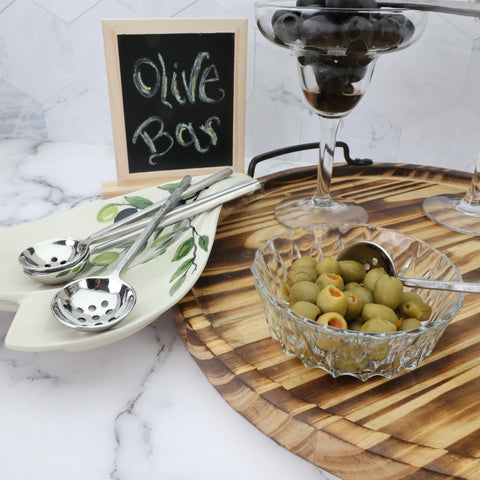
When shopping for premium stainless steel flatware, you will quickly discover that the most critical details are hidden in plain sight. Stamped or etched onto the back of almost every high-quality fork, knife, or spoon are numbers like 18/10 or 18/8.
To the casual diner, these fractions look like confusing manufacturing codes. However, to interior designers, metallurgists, and hospitality experts, these numbers are the ultimate indicator of how your stainless steel flatware will look, feel, and perform over decades of daily use and dishwashing cycles. Let’s break down the science behind these alloy ratios to determine which option delivers the absolute best value for your dining room.
The Ultimate Metallurgical Verdict

Based on the composition of both 18/8 stainless and 18/10 stainless steel, both are quality, high-grade types of flatware for use in today's dining at home. While the 18/10 has slightly more nickel than the 18/8, thus providing slightly more of a silver-type shine, 18/8 stainless does have the same, maximum rust resistance and superior malleability; therefore, allowing artisan blacksmiths to forge deep, very detailed, and long-lasting textures while maintaining a strong underlying structure.
Summary and Key Takeaways
Key Takeaways
- Chromium is King: Both 18/8 and 18/10 stainless steels contain the essential 18% chromium to effectively protect against rust.
- Nickel's Role: The additional 2% nickel in 18/10 provides a more brilliant sheen; whereas, the 18/8 allows for more texture from the fire-forging process than the basic nickel composition of 18/0.
- Avoid 18/0: Avoid purchasing 18/0 stainless steel for everyday use because it lacks nickel, making it prone to staining or bending.
Ultimately, the choice of one type of stainless steel flatware over another should be decided based on the intersection of engineering versus personal style or expression. Premium forged 18/8 stainless steel is the ultimate compromise if you are looking for a table that feels artistically completed, deeply textured, and structurally robust against the rigors of everyday living. Check out Inox Artisans today to discover the beautiful fire-forged flatware collections and find your lifetime mate.
Decoding the Numbers: What Do 18/8 and 18/10 Mean?
To select the best day-to-day kitchenware, you must be familiar with the basic chemical properties of stainless steel. Stainless steel is not a stand-alone product but rather a mixture of iron and various mineral additions, which give it properties such as strength and rust resistance.
Chromium: The first number in the designation (18) refers to chromium content; both five and ten contain 18% chromium; therefore, they have the same amount of chromium. When chromium combines with oxygen (air), a passive coating forms on the surface of an item made from stainless steel. This coating is not visible and appears to be self-renewing, which contributes to the strength and virtually eliminates the risk of rusting.
- The second number indicates nickel (the alloy's second component). The two premium alloys differ from each other at this point. 18/10 flatware has 10% nickel and 18/8 flatware has 8% nickel. Nickel is the primary protector against damaging (pitting) caused by common food acids (i.e., lemon juice, tomatoes, salt) and adds a warm, platinum-like feel to the finish.
The Handcrafted Factor: Why Inox Artisans Embraces 18/8 Steel

The big aunties of boxed products make it seem like all you’re getting with your $$$’s is a luxurious-quality, 18/10 material; however there are different stories when it comes to the beauty of the hand-crafted, artisan-forged cutlery.
This is the rationale behind our decision on utilizing the premium 18/8 stainless steel due to its ability to provide exceptional characteristics and create artistic/functional hand-forged collections (Ridge, Sundance and Twisted Urban). In addition to this, by adding the 10% nickel content to the 18/10, will give steel additional hardness and correct cold-wrought depressions when handcrafted work, (the cold-wrought portion refers to the amount of deformation and not the actual temperature), i.e., a complete work of metal has gone completely hard because of the methods used to make it hard.
Our master artisans utilize the properties of 18/8 steel to create the perfect amount of corrosion resistance along with the malleability that is consistent with the initial forging process. The malleability allows for the deep organic faceting and architectural twists that you will not find from stamp-plants.
Key Considerations for Your Next Set
When choosing between these premium alloys for your table, consider these vital buying factors:
Feel the Surface
You like modern minimalist cutlery that is super smooth, shiney, and high-gloss? Look no further than 18/10 Flatware as it produces a silver shiny clinical mirror like finish. Do you like to experience “Material Dichotomy” (the contrast of tactile, rough hammered handles against shiny polished ends)? Then try forged 18/8 Stainless Steel – this combination will provide an incredible mix of both styles.
Understand the Manufacturing Method
The alloy of a utensil has little meaning if the utensil itself is thin and flimsy. Always look for a flatware set that is forged rather than stamped (made from a sheet). You will notice a forged 18/8 spoon has a greater weight, better balance, and is much more luxurious when held than an 18/10 spoon that was stamped
FAQs
What does 18/8 stainless steel mean?
It signifies an elite steel alloy composition consisting of 18% chromium (for surface hardness and rust prevention) and 8% nickel (for enhanced luster and acid protection).
Is 18/10 better than 18/8?
Technically, 18/10 has 2% more nickel, giving it a marginally brighter mirror-like shine. However, in terms of structural durability, tensile strength, and real-world performance, they are virtually identical.
Which flatware resists rust better?
Both resist rust equally well because they share the exact same 18% chromium foundation. Both grades are vastly superior to 18/0 steel, which lacks nickel entirely and is highly prone to rusting in the dishwasher.
Which stainless steel lasts longer?
When properly cared for, both 18/8 and 18/10 stainless steel flatware sets are heirloom-quality investments designed to last a lifetime without structural degradation.
Is 18/8 good for everyday use?
Yes, it is phenomenal for everyday use. It easily withstands daily family meal prep, high-heat dishwashers, and contact with acidic ingredients without pitting or losing its premium finish.
Which option offers better value?
18/8 flatware frequently offers better value. It delivers the exact same heavy daily performance and stain resistance as 18/10 but allows for more intricate, hand-hammered artistry at a more approachable investment level.