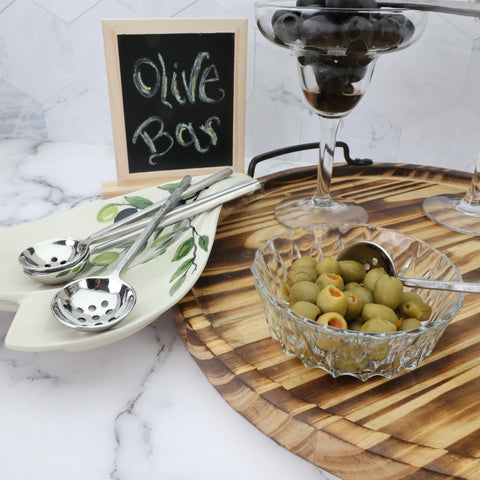
In the hustle and bustle of a kitchen, everything even dishes has its own rhythm. The chef's knife does all the prep, the pan handles all heat and the spoons help establish that bridge from pot to plate. The slotted spoon is probably the most essential but least understood of the many kitchen spoons. It is not just a spoon with holes; it is an engineering design to manipulate physics, the separation of solids from liquids.
To all of you poaching eggs, blanching seasonal greens or even serving up a hearty stew – knowing how to put that slotted spoon to work can be the difference in taking your cooking from amateur to artisanal. We will be looking at the engineering, the practicality and just how maintenance-friendly this kitchen workhorse is.
What Does a Slotted Spoon Do?
It acts as a bridge. It's really only the standard role of a slotted spoon, which is that it helps its owner lift any type of solid food from a liquid medium, be it boiling water, hot oil or somewhat satisfying stocks while letting the liquid drain back through the slots or holes into the body itself.
Otherwise you would need a solid spoon in which the liquid gets caught. That usually means wet food, watered-down sauces or, if the hot breather oil hits the plate, a fiery spray. Well, the slotted spoon allows only the hero of the dish to end up in your serving bowl at the end and it does so with flair, all well drained.
Slotted Spoon vs. Regular Spoon: The Key Differences
At first glance, they might seem similar, however, the slotted spoon vs regular spoon debate is determined by what you are trying to achieve with your dish.
- The Regular (Solid) Spoon: for containment. Its hard surface is intended for basting, stirring and serving liquids-laden meals like soups, porridge or sauces in which the liquid itself is part of the bite.
- Slotted Spoon: This is for straining. It has perforations in it so solids may be "pushed" up through it while liquids will not "pick" and liquid is carried over the top.
Or if you are dishing up a slow-braised beef bourguignon, but to make sure the luscious red wine sauce embraces the meat more fully, use one typical spoon. In contrast, if you are lifting a delicate tortellini from a pot of boiling salted water, the only option to prevent getting a plate full of soggy pasta is a slotted spoon.
Types of Kitchen Spoons: Where Does the Slotted Spoon Fit?
The landscape of culinary tools is vast. To understand the slotted spoon, we must see it within the hierarchy of its peers:
- Solid Spoon: For stirring and serving liquid.
- Slotted spoon: A spoon with holes for lifting solids from water or light sauces.
- Perforated Spoon: These spoons are like slotted spoons but have many small circular holes instead of long slots. These are commonly used for smaller items—like peas or corn.
- Skimmer (spider): A close relative of the slotted spoon and typically, though not always, made from a wire mesh; commonly used for deep frying or skimming the scum off the surface of boiling stocks.
- Basting Spoon : A long-handled solid spoon that is used to drizzle hot fats over meats while they are roasting.
Why a Slotted Spoon Stainless Steel is the Professional Standard
When it comes to choosing the best slotted spoon, the foremost factor is its material. Though silicone and plastic are both common in home kitchens, a slotted spoon stainless steel construction represents the clear professional standard for a number of reasons:
- Heat Resistant: Many things look good in the kitchen; most plastics include cookware; while prior to melting/melting when they touch hot pans, stainless steel endures severe heat, so both boiling and frying are entirely possible.
- Non-Reactive Nature: Stainless steel with good quality (those 18/10 or 18/8 grades used in INOX products) does not react to the acidic food, such as tomato sauce and lemon base broths.
- Strength: A forged stainless steel spoon won't snap from the weight of a big potato or cut through a hunk of meat.
- Classic Touch: Home décor is one of the essential components on a Pinterest kitchen where it must be aesthetic which polished steel gives that minimalist look and can never find in the plastic material.
The Art of Using a Slotted Spoon: When and How
- Blanching and Shocking
Cooking green vegetables, such as asparagus or green beans, is all about timing. You have to remove them from boiling water just when they become bright green, and then "shock" them in ice water. With a slotted spoon, the whole batch can be removed in seconds, halting the cooking process.
- Poaching Eggs
The trick to no waterlogged eggs. The slotted spoon lets the excess whites and water fall away, leaving you with a perfectly pristine egg in teardrop shape that just begs to sit atop a piece of sourdough.
- Frying and Searing
There is a "Spider" for use primarily in deep frying, while a sturdy slotted spoon stainless steel works best for shallow frying. It can help you turn and catch things like meatballs or fritters, while keeping the hot oil in the pan.
- Serving from a Braise
When dishing up a pot roast or tray-bake, you want meat and vegetables plated cleanly with gravy added as a drizzle rather than a flood. The slotted spoon lets you plate it to perfection. Pair it with the rest of your serving pieces for a complete, elegant table presentation.
Caring for Your Artisanal Slotted Spoon
When it comes to preserving the luster of a high-end slotted spoon, tparticularly those with intricate hand-held textures or PVD finishes, care is paramount.
- Washing by Hand: Although some stainless steel tumblers are labeled dishwasher safe, hand washing with soap and water will protect your tumbler since the abrasive chemicals found in dishwasher pods can dull metal.
- Type of Material: Stainless Steel is Stain-less, not Stain-proof Immediate Drying After washing, try to dry your spoon right away: that way no water spots and "tea staining".
- Polish: Every several months, buff the spoon with a microfiber cloth, keeping that out of this world shine.
Why INOX Artisans Offers the Best Slotted Spoon
At INOX Artisans, we feel like even the most utilitarian tool should be a piece of art. Unlike factory slotted spoons, our are hand-crafted by highly skilled artisans.
When you choose an INOX slotted spoon you are investing in:
- Hand-Forged Feeling: Most of our handles will have tactile designs like "hammered" and "twisted urban." This provides natural, hands-on grip.
- High Grade 18/8 Steel: Premium stainless steel that will keep your tool in your house for a lifetime.
- Designed with Consideration: Slots are specially developed to drain quickly, so that your culinary presentation is delightful and crisp.
Whether this is your first flatware set or you are just in search of that one "hero" tool for your stovetop, the INOX slotted spoon is where high-performance engineering meets artisanal beauty..
Frequently Asked Questions (FAQs)
What is the purpose of a slotted spoon?
The slotted spoon is used for lifting solid food out from a liquid along with the draining of the liquid through the holes. This prevents sogginess of food and ensures that excess fat or water does not enter the final serving.
What is the difference between a slotted spoon and a regular spoon?
The main difference between a slotted spoon and a normal spoon is having holes. A typical spoon is used for liquids therefore it is firm, whereas a slotted spoon is useful only to separate solids from liquefied parts.
Can you use a slotted spoon for frying?
Yes, if it is heat tolerant. Slotted spoon stainless steel are hot oil temperatures and wont melt like plastic as well as leaching chemicals into food so it is perfect for frying!
What material is best for a slotted spoon?
The best slotted spoon material is stainless steel (18/10 grade). It's sturdy, rustproof and looks much better than plastic or wood.
How do you clean a stainless steel slotted spoon?
It is advisable to wash with warm, soapy water and a sponge. If there are bits of food that won't budge from the slots, a small nylon brush is your best bet. Immediately dry to avoid any kind of water spots.
What is a slotted spoon called in professional kitchens?
The generic name "slotted spoon" is technically correct; however, they're typically referred to for their service use or as "service spoons" or "perforated spoons," depending on the type of hole pattern.
Are slotted spoons only for cooking or can they be used for serving?
They are essential for both! They are used for lifting and straining in cooking. They are ideal for "dry" service to customers: bottles of such vessels come in handy when serving, for example, olives, meatballs, or poached fruits (without the packing liquid).