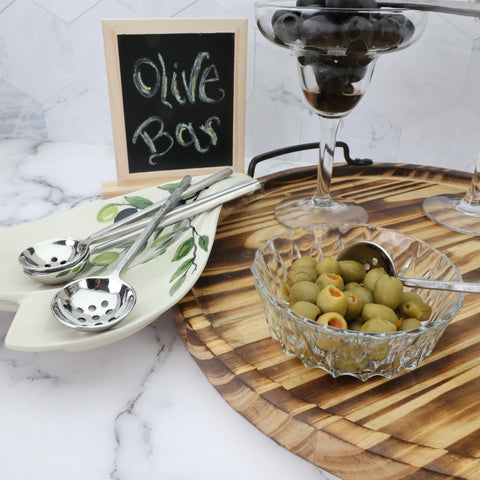
No matter what’s on your menu right now, chances are you will be using a spoon at some point in the cooking process. We employ it to mix our morning coffee, cook a pot of spaghetti for dinner or serve up a steaming ladleful of hearty vegetable soup – in all these applications (and many more) spoons are an essential tool of culinary and dining tradition. Each type of spoons is designed for a specific purpose, such as measuring, stirring and consuming certain type of foods.
As you restock your necessary kitchen tools, or if you’re even planning a new restaurant’s inventory, this comprehensive guide will take you through the many types of spoons for cooking, serving, fine dining, measuring and other specific jobs. It’s helpful to know the best silverware brands as you’re selecting pieces for your collection.
Types of Cooking Spoons
If you're a working chef in a busy restaurant kitchen or just a home baker who's super into baking, there's also good chance that you have lots of cooking spoons stashed away in drawers. There are numerous types of cooking spoons that every working kitchen should contain.
Wooden Spoon
These spoons are extremely useful for just about anything that one would have to do in a kitchen, which given the amazing properties of wood as both strong, heat resistant and naturally non-scratching are easy on your food!
-
Best For: Mixing and stirring hot foods for long periods of time, cooking in non-stick pans, mixing in whipped topping or pastry etc, serving food.
-
Average Size: This can differ a lot because of the specific style of spoon.
Slotted Spoon
You can also use slotted spoons to fish out things like boiled eggs, blanched vegetables, potatoes or other large items from hot cooking liquids without all the splashing.
-
Common Uses: Cooking pasta, basting meats, lifting out items from boiling water.
-
Average Length: usually between 10 and 21 inches.
Bar Spoon
A vital part of any bartender's or home bar tool kit, a bar spoon is a long-handled and small-bowled spoon that is ideal for stirring tall cocktails. A lot of regular old bartender’s spoons have a twisted stem that helps extract cherries or olives resting in the bottom of a deep glass.
-
Best Uses: For stirring cocktails, for layering shots, to pick up garnishes without getting your hands sticky, to crush herbs on the back of the spoon and to retrieve debris from the bottom of a glass.
-
Typical Size: Approx. 12 inches long; contains around 5 milliliters or 1 teaspoon of liquid.
Spaghetti Spoon
It may seem like your standard pronged cooking spoon, though a spaghetti spoon is distinguished by the fact that it has a conspicuously large hole right in the center of the bowl.
-
Main Uses: Cooking, measuring, serving spaghetti and other long pasta.
-
Average Size: Measures 10 to 21 inches in length and the center hole is a 2 1/8 inch diameter.
Mixing Spoon
Whether you are making your favorite cake batter or a hot and spicy salsa, a mixing spoon is your go-to tool for most of your kitchen engagements. Although they don't necessarily attract attention, mixing spoons are characterized by their shallow wells and fat curving sides.
-
Use for: Blending soups, hot dishes, batters (for cakes and pancakes), salsa, beverages, and liquid desserts.
-
Typical Size: 15-16″ in length; however, they can range as low as 10″ or as high as 22″.
Basting Spoon
The basting spoon is a versatile tool that may be used to remove cooked and solid foods from a pan, as well as skim fat from boiling liquids.
-
Main Uses: Basting meat, poultry and fish during cooking.
-
Average Size: 10 to 15 inches.
Types of Serving Spoon

As you build your collection, consider the best silverware sets that come with complementary serving utensils for a put-together table setting.
Ladle
Distinguished as the most efficient serving for soups, sauces and gelatinous concoctions is the ladle, with its very deep vessel attached to a long curving handle.
-
Main Uses: Serving soup, stew, punch and gravies.
-
Average Size: 10 inches – 15 inches; accommodates up to 4-8 ounces of liquid.
Sugar Spoon
Popular from the high end restaurants and tea houses, sugar spoon is for serving granulated sugar with a coffe or tea.
-
Common Use: For serving sugar loose in a dining room setting.
-
Average Size: About the size of an average teaspoon.
Rice Spoon
A rice spoon is recognizable by its unique, wide bowl and flat shape.
-
Main Usage: Mixing, fluffing and serving rice.
-
Typical Size: 5 to 12 inches.
Salad Spoon
Often accompanied by a matching salad fork, this is used for serving salads at formal dinners.
-
Florence Uses: Serving green salad and mixed salad.
-
Typical Size: 6 to 15 inches.
Salt Spoon
Instantly discernible by its smallness, a salt spoon is, in fact, a little service implement that's intended for serving coarse or flaked sea powder at the formal dining table.
-
Primary Uses: Serving open-cellar salt.
-
Typical Size: 2 to 3 inches.
Portion Spoon (Generic)
Present in many casual restaurants as its standard serving spoon, the portion definitely takes an amount of food for each diner.
-
Primary Uses: Serving specific, measured portions of food.
-
Average Size: Depends on your selection.
Types of Spoons for Eating
Whether you have an upscale restaurant or a casual food place these eating spoons are an integral part of the experience and your customers will want to use them in order to eat and make that first impression of your meals. From the basic dinner spoon to extravagant caviar spoons, each of these utensils has distinctive features which can make a dining encounter more enjoyable. When you buy silverware online, you will often find these categorized by their specific table use.
Below are several common types of silverware spoons used for eating, with details on their proper placement, usage, and size. Those looking for high quality can shop the artisan offerings at Inox Artisans, equally astounded by the range of these eating spoons that pair practicality with handmade beauty.
Dinner Spoon
One of the most widely used eating spoons, a dinner spoon is any utensil you’ll find on every table in diners and all-inclusive resorts. Its shape is meant to perfectly fill your mouth, with a roundish or slightly oval bowl.
-
Uses: All-purpose eating spoon, usually for the main course.
-
Average Length: 6 to 7 inches about the capacity of a tablespoon.
Dessert Spoon
Because it is smaller than a regular dinner spoon, the dessert spoon is also suitable for use in eating other courses. The oval bowl is slightly elongated compared to that of an eating spoon, which enables you to scoop up bites of sweet treats like mousse or custard with precision.
-
Common Uses: Mostly for dessert eating, but it can be all-purpose too.
-
Normal Size: All over the map, between a teaspoon and a tablespoon..
Coffee Spoon
Despite being one of the world's most loved drinks, the real active coffee spoon is hard to comeby and you'll usually only find it if part as a special set. Some places have coffee spoons which are used in serving post-prandial cups of coffee. But coffee spoons are seldom found in companion with breakfast-coffee or at any common coffee house.
-
Anchor Uses: Mixed serving of sugar and cream in coffee.
-
Average Size: Roughly the size of a standard teaspoon.
Demitasse Spoon

Demitasse spoon is even smaller than a coffee spoon, and intended for use with small espresso cups. Found in Europe and upscale US venues, demitasse spoons are typically of gold, silver or stainless steel construction and size with sometimes elaborate design.
-
Best Uses: Stirring cream and sugar into an espresso or tea; Testing foam from a cappuccino.
-
Average Size: Aprox. 3 to 4 inches and under one teaspoon in volume.
Iced Tea Spoons
Distinguished by their elongated handles, these great iced-tea spoons are created to assist you in stirring sugar or lemon into your favorite iced beverage. The small size of the bowl and long handle makes perfect for mixing glasses of iced tea, soda, beer etc or for drinking a big cup of milkshake/sundae but it is just as good to use when you’re eating out of high Teaglass bowl.
-
Great Use: Stirring cocktail, iced tea, soda and so on.
-
Average Size: 7 to 10 inches long; one teaspoon in volume.
Grapefruit Spoon
Also called an orange spoon, a grapefruit spoon features sharp serrated edges as well as a pointed bowl ideal for removing the fruit flesh from its rind. This all in one utensil cuts down on washing up and space in the lunch box. Stainless steel is often used, as the spoons use and eat away at citrus fruits.
-
Main Usages: Peel, fruit digestive.
-
Average Size: 5 to 8 inches long; about a teaspoon in volume.
Spork
A hybrid between the scoop of a spoon and the prongs of a fork, the spork is a super efficient tool. Sporks usually have a spoon-shaped bowl at the end of their handle that becomes fork tines (usually four or five) toward the tip.
-
Main Uses: Eat all kinds of food without changing your cutlery, ideally for outdoor dining.
-
Typical Size: 5 to 7 inches.
Caviar Spoon
A caviar spoon is not defined by its shape or purpose, but by what it's made of. Most caviar spoons are made from mother-of-pearl, gold, silver, wood or horn to avoid oxidizing metals that would interfere with the caviar’s fragile flavor and texture.
-
Primary Uses: Eating caviar.
-
Typical Size: 2 to 5 inches.
Frequently Asked Questions
Which is bigger between a tablespoon and a dessert spoon?
There is usually more content in a tablespoon than in a dessert spoon. In some dining sets, the main course or serving utensil is a "table-spoon", which is used to serve onto a plate; the midsize spoon used at other times, including in the preparation of food, is known as a "dessertspoon" (by analogy to the teaspooon).
Why are you advised to use Wooden Spoons on non-stick pots/pans?
Wooden spoons are gentle and non-abrasive, making them safe for non-stick surfaces too. And unlike metal spoons, they don't conduct heat so you can stir hot dishes for long periods of time without burning your hands.
Can I eat cereal with a soup spoon?
You can use a soup spoon for cereal if you want, but many people enjoy using a dessert spoon or dinner spoon. A round bowl soup spoon is intended for sipping broth, the more oval-shaped dessert spoon might be a better one to use for cereal and milk.
What is the reason for the hole in a spaghetti spoon?
There’s also a hole in the squat middle of spaghetti spoons This serves two purposes: To allow boiling water to drain off when you lift the pasta and, incidentally, it is sized to contain precisely one standard serving of dry spag noodles!
How Do I Take Care of Specialty Spoons in Silver or Gold Plated?
Specialty spoons, such as those made of precious metals, should be hand-washed in a gentle soap and then dried quickly to avoid water spots or tarnishing. Do not use abrasive scrubbers or harsh chemicals on pieces of exquisite collections as the one offered by brands such as Inox Artisans.